
Ecommerce is now a thriving industry in the age of the internet, providing businesses with great chances to access a global clientele. However, a clearly defined strategy and a focus on customer satisfaction are necessary if you want to stand out in the crowded ecommerce market and generate consistent sales. In this article, we’ll look at tried-and-true methods for increasing your online sales and thriving in the digital economy.
Table of Content
- Why specific customer traffic is important for new stores
- What you should know before starting
- Pursuing those that are low-hanging as free traffic sources
- Use your private networks
- Participate in online communities
- Reaching out to already-existing audiences
- Paid advertising
- Analyse: Looking back to improve
- Get out there to develop yourself
Why specific customer traffic is important for new stores
It’s simple to assume you’re doing better as a new internet store owner if you pick at the smallest elements when developing your company behind closed doors, such as changing your mind about fonts, pricing, and brand colours.
On the other hand, only by opening your company up to the public can you actually progress. If you don’t develop a standard that you can quantify with precise data, you won’t know where you’re progressing. Because of this, traffic is crucial.
If you don’t drive traffic, you won’t know if there is any demand in your products. If you don’t generate traffic, you won’t know if your pricing are too expensive. If you don’t generate visitors, you won’t be able to tell if your brand appeals to your target market.

What you should know before starting
Avoid a method if it doesn’t work for your business and the products you sell. It’s unlikely that Pinterest would be your first choice if you were selling computer keyboards, for instance.
As you apply each marketing strategy, set up Google Analytics in ahead and keep a tight check on traffic. Not everything will succeed. So prepare to spend the next 30 days swiftly studying and iterating as you work towards making your first transaction.
Pursuing those that are low-hanging as free traffic sources
The free sources of traffic should be looked into initially. Usually, this entails manually promoting your store to your network and pertinent internet communities.
These traffic sources are an excellent place to start because they’re accessible to all online store owners and reasonably simple to implement. The following advice should be kept in mind when you work with free traffic sources:
First tip: To encourage visitors to visit your store, think about providing a promo code.
By actively contacting prospective clients on LinkedIn, The Jewellery Wardrobe is able to give them $25 gift cards in exchange for their email addresses and survey replies.
Second tip: Every online activity you take has the potential to increase foot traffic to your shop. Your personal web accounts, such as your Twitter bio or your Disqus profile for blog comments, should include your store URL.
Third tip: Don’t bombard audiences with unoriginal, ineffective marketing messaging. Instead, focus on adding value and developing sincere relationships.
Use your private networks
It’s not untrue that many business owners make their initial sales through personal relationships. In order to let your whole network know about your store, post it on your personal Facebook, Twitter, LinkedIn, Instagram, and Snapchat profiles.
To spread the word about the opening of your store, think about sending individual emails to your closest contacts. Ask them directly to contribute a share; they are not need to make a purchase from you in order to support you.
This is an excellent technique to collect early feedback even if any sales you make this way won’t be as satisfying as when you gain the trust of a total stranger as a customer.
Don’t get disheartened if you don’t make any sales from this because it’s the least qualified traffic source on the list overall.
Everyone (since we all have friends, family, and coworkers), but especially those with sizable personal networks on Facebook, Instagram, Snapchat, Twitter, or LinkedIn who are already reasonably engaged online.
Participate in online communities
Never ignore the importance of strategically placing a link to your store. Find specialty online groups in your field, join Facebook Groups, and post on forums like Reddit. Each of these avenues offers a chance to connect with others who have banded together based on shared interests. Look for hobbies that have something to do with your business.
Join communities that your target audience frequents and become involved to meet people in the area. After you’ve established a solid online presence and made genuine connections, you might provide a link to your store, possibly along with a promotional code.
Groups are another way to access advice and assistance from seasoned businesspeople. Check out, for instance, the following communities:
- Reddit/ecommerce
- reddit/Entrepreneur
- Increases Sales Facebook Group
- Shopify Business Owners Facebook Group
- Entrepreneurs and innovative ideas Linkdin Group
- Community for Shopify
Suitable for: stores that cater to particular interest groups, such as dog owners. However, anyone can benefit from online support groups for entrepreneurs to gain helpful advice from people who have already done it.
Reaching out to already-existing audiences
If you are the only one communicating about your brand, it won’t be particularly effective. Thanks to the internet, anyone may now create a platform, which enables you to collaborate with them.
The following strategies not only aid in increasing traffic, but also frequently involve the usage of content (a news article or a product review, for instance) that enhances the legitimacy of your business. Essentially, with each fruitful partnership, you’re slaying two birds with one stone.
Look for partnerships of strategic importance
Partnerships can be a terrific method to expose your goods to another’s customer base.
Finding non-competitive, like-minded brands that already draw the demographic you’re after is crucial here. Finding and creating these chances can take some time and luck, but the trade-off is that you can be incredibly creative with the partnership:
- Run a competition with your item up for grabs.
- Include free samples of your products or special offers with complimentary purchases (such as providing a drink mix sample with each order of your business partner’s water bottles).
- Promote an event.
- We’ll jointly produce something.
Engage influencers
Not just large corporations can use celebrity endorsements to promote their products.
You can collaborate with influencers—creators who have sizable followers in your niche—to draw in an existing fan base for traffic and, while you’re doing it, get some content made about your goods.
On every platform, from YouTube to Instagram, there are influencers. In addition, there are a number of influencer marketplaces that link producers and businesses, so you may approach them directly to make a deal:
One of the more well-known influencer marketplaces.
- Famebit: Endorsements start at $100, but influencers must have 5,000 followers or more in order to be listed.
- Crowdtap: This marketplace, which is smaller in scope than most others, enables you to reward quick content creation “tasks” with cash and other rewards.

Unofficial promoting
Not all of your traffic needs to come from the internet. Take your marketing offline and spread the word yourself if you’re having trouble with early sales.
Visit your neighbourhood dog park and hand out fliers while interacting with people if you’re selling dog collars, for instance. Or, if you can quickly create samples of your product, think about offering some for free. Your own pop-up shop might also generate some excitement.
Guerrilla marketing calls for both courage and imagination. But in our interconnected world, it’s never been simpler to tell someone offline to “check out my website” and watch it translate into traffic online.
Paid advertising
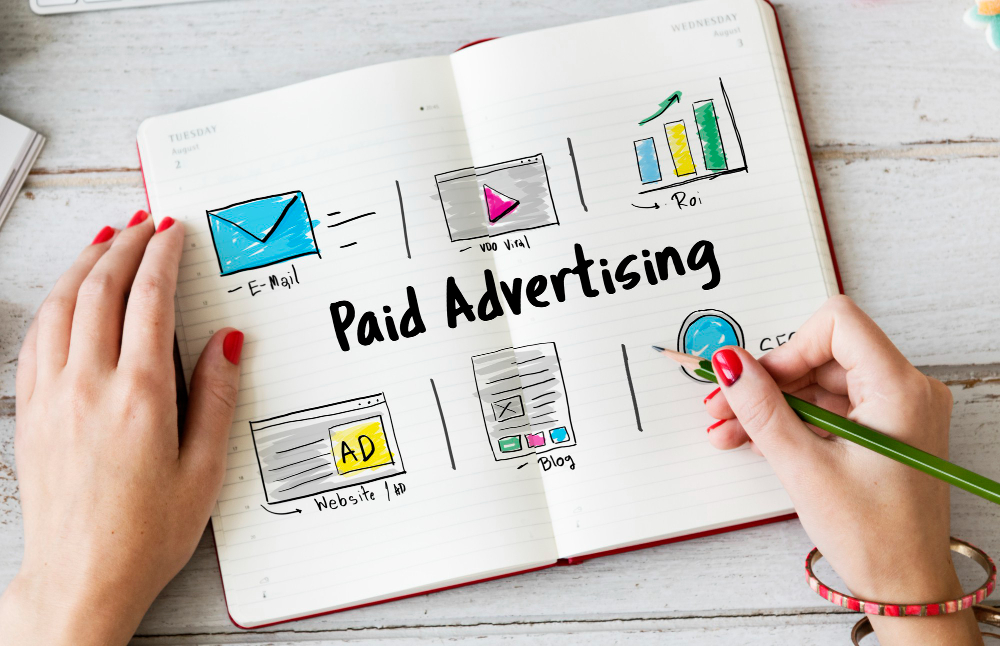
Using paid advertising to swiftly attract targeted traffic is the best approach to make money online. The good news is that you can pay per click on a lot of paid advertising channels. You may be able to start with a budget of just $10 in some circumstances.
Because each advertising platform is unique, you should pick these channels depending on your target audience and how the tools will help you connect with potential customers. You might even want to look into which social networks are popular in particular marketplaces if you’re targeting particular nations.
Facebook promotion
Facebook, one of the most widely used social networks, has one of the most diversified user bases in terms of age, income, gender, and location, according to Pew Research.
To find their ideal customers, a variety of firms can use Facebook’s targeting choices, which include age, gender, job title, geography, and interest.
Interests is a particularly useful one. You may create ideal buyer profiles that determine who sees your adverts by starting with the Facebook pages that users have liked.
Instagram advertising
The website has other appeals besides its primarily young demographic and visual nature.
In addition, according to data from Smart Insights, it has one of the most active user populations among social networks. If you employ pertinent hashtags, it’s a terrific venue for regular unpaid posts to reach a sizable audience in addition to influencer marketing. A tool like Taler can help you select the best Instagram story templates to get started if you need assistance with your creativity.
To increase traffic, you can use Instagram advertising to show your own visual advertisement in other people’s feeds.
Pinterest marketing
Pinterest is a sometimes overlooked platform. However, it also has the most distinctly defined user base. According to Pinterest, the majority of its users are female, and claims that many of them have extra money. Additionally, both free and paid initiatives might result in significant traffic generation.
Similar to scrapbooking, using Pinterest involves users creating boards to compile and save “Pins” based on predetermined themes. Keep that in mind when you promote on Pinterest because people frequently use it to organise wardrobes, save fascinating articles, and organise events.
Pinterest has many options that make it simple to market on it, from Promoted Pins to Buyable Pins.
Ads from Google
Many customers search for the item they want to purchase on Google first. When customers search for pertinent terms, your website can be displayed at the top of the page using Google Ads, formerly known as Google AdWords.
Google advertising has several choices, including text advertising that are prominently displayed in search results and shopping ads, which present your product’s image and price in a format that is more suited for online stores.
To find out how many people are searching for terms that may be relevant to your target audience, conduct keyword research. Because of the confusing design of Google Ads, many people find it scary. If you want to take advantage of the possibility but would prefer to delegate it, think about hiring a Shopify Expert.
Analyse: Looking back to improve
Hopefully by this stage you’ve tried enough strategies to observe an increase in traffic and perhaps even some revenues. By exposing your store to traffic, establishing a standard for its performance, and then working to improve it, you may learn how to create feedback loops as you take on this challenge.
Now that you’ve looked at your analytics dashboard (both Shopify and Google Analytics) and the feedback you’ve received from actively promoting your business, you can start diagnosing any potential issues with your site.
You can infer plausible explanations for why clients might not be purchasing from you based on the behaviour of your visitors.
You are able to determine probable reasons for why clients might not be purchasing from you based on the behaviour of your visitors:
- Your traffic may be of low quality or your store may be taking too long to load if you have a high bounce rate, which refers to users arriving at your website and leaving right away (you can test the latter here).
- It’s possible that you haven’t achieved product/market fit if none of your visitors added anything to their shopping carts (in which case you should look for the appropriate niche or test out various products). Or maybe they simply lack the confidence in your store to make a purchase.
- If you experience a high rate of cart abandonment during checkout, you might want to reevaluate your shipping.
Based on these insights, you may start making adjustments to your store to improve your chances when you do another round of promotion.
Get out there to develop yourself
Making the connections between your brand and your customers in a world of limitless choices is the key to driving traffic. Due to the sheer number of chances available, this is in part why makes marketing so difficult to manage.
The solution to this is not one size fits all. You can only discover what works for you by exploring, attempting, failing, and improving. The only way to expand is to put your store in the public eye.
FAQ
Q1: What are the initial steps in creating a website for your business?
You must: in order to create an online store.
- Alternatively, you can create your own website.
- Register a domain name.
- Establish a safe payment gateway.
- Organise the product inventory and create a system for managing orders.
- Create a user-friendly interface and make it mobile device compatible.
- To protect customer data, put in place strong security procedures.
- To increase visibility, make your website search engine optimised (SEO).
- Make use of sponsored advertising on social media or Google Ads.
- Make use of social media channels to interact with your target market.
- Use content marketing techniques like video marketing and blogging.
- Work together with affiliates or influencers to market your items.
- To entice customers, provide special discounts, promotions, or offers.
Join us as you begin your Shopify journey
We are e-commerce specialists and Shopify Partners. Get in touch with us if you need assistance with Shopify, need a whole website built, or have any other general questions.