
Traditional marketing approaches frequently find it difficult to keep up with the shifting consumer needs and technical developments in today’s quickly expanding corporate environment. In response to this difficulty, the idea of agile marketing has become very popular. Agile Marketing is a strategy that takes cues from agile software development processes with the goal of giving marketers a framework that is adaptable, flexible, and customer-focused. We will examine the concept, benefits, and provide helpful guidance for successfully implementing Agile Marketing in this article.
Table of Content
- Defining agile marketing?
- Benefits of agile marketing
- How is agile marketing set up?
- Examples of agile marketing companies
- Implementing agile marketing: practical advice
- Conclusion
Defining agile marketing?
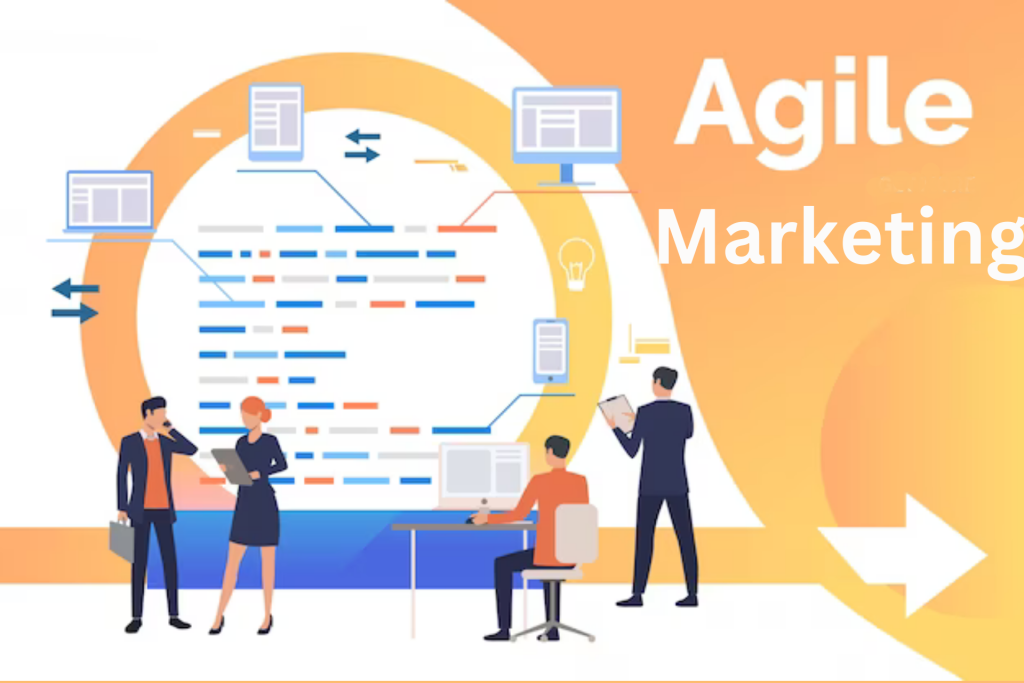
Agile marketing is an iterative and adaptive method of marketing that emphasises client feedback, teamwork, and the capacity to react quickly to shifting market conditions. Its foundations can be found in the Agile Manifesto, which was initially developed for the software development industry but has since been effectively implemented to many other business fields, including marketing.
Agile marketing’s main principle is to divide large marketing campaigns into smaller, more manageable jobs, known as “sprints.” Each sprint usually lasts a couple of weeks and is focused on attaining particular, quantifiable objectives. “Stand-ups,” or regular meetings, are held to assess progress, pinpoint challenges, and make necessary adjustments. This ongoing feedback loop makes sure that marketing initiatives stay in line with the changing needs of the company and its clients.
Advantages of agile marketing’s
1. Adaptability & flexibility
Agile marketing empowers teams to make quick adjustments in reaction to shifting consumer preferences, market trends, or unanticipated outside influences. This adaptability guarantees that marketing initiatives are effective and relevant in changing settings.
2. A customer-centered strategy
Agile Marketing puts the client at the centre of decision-making by emphasising customer input and participation. Better targeted advertisements and products that appeal to the target market result from this.
3. Shorter Time-to-Market
Projects can be completed more quickly by being divided into smaller sprints. This quickened pace improves the company’s capacity to exploit opportunities and keep up with rivals.
4. Transparency and Collaboration
5. Data-Driven Decision Making
6. Less Waste

How is agile marketing setup?
Agile marketing is not a project management solution; it is a workflow and project management mindset. An agile project management approach, usually kanban or scrum, is used by organisations to implement agile processes. (Both are occasionally referred to as “agile methodologies” since agile marketing teams frequently use them.)
The agile marketing process divides tasks into brief, intense bursts, known as “sprints.” Agile marketing executives put together a small cross-functional team at the beginning of each sprint made up of the individuals required to produce the specified product. An agile marketing team, for instance, might have a copywriter, a graphic designer, an SEO expert, and an analytics lead working on a digital marketing campaign. The agile marketing team will evaluate its products at the conclusion of the sprint and collect information that will help it plan the following one.
Agile marketing is an innovative technique of advertising that takes its cues from the ideas behind agile software development. It emphasises adaptability, flexibility, and teamwork, enabling marketing teams to react swiftly to shifting market circumstances, client demands, and emerging trends. This is how agile marketing functions:
- Cross-Functional Groups: Agile marketing teams are frequently divided into small, cross-functional groups with individuals that possess a range of expertise, including marketers, designers, developers, and data analysts. Better teamwork and communication are encouraged by this arrangement.
- Sprints and Iterations: Agile marketing runs in quick, time-limited cycles called iterations or sprints, which typically span one to four weeks. The team chooses a collection of activities or projects to concentrate on during each sprint, emphasising those that offer the most value or address the most pressing needs.
- Backlog: The team keeps track of work that need to be performed, including projects, campaigns, and marketing initiatives. Continually changing market trends, business objectives, and customer and consumer feedback are used to determine the backlog’s priority.
- Prioritisation: The team collectively decides which tasks from the backlog will be worked on during that sprint at the start of each sprint. Based on variables including potential impact, urgency, and dependencies, tasks are prioritised.
- Stand-up meetings each day: Agile marketing teams do brief daily standup meetings to go over their progress, difficulties, and daily plans. These gatherings encourage openness and assist in swiftly locating and resolving any obstacles.
Examples of agile marketing companies
Some axamples of companies that employ agile marketing strategies include:
To introduce new items and advertise current products, General Mills use agile marketing. A cross-functional team at the organisation creates and implements marketing initiatives in sprints.
To advertise their Firefox browser, Mozilla employs agile marketing. A group of community managers at the business interact with customers to solicit feedback on marketing initiatives.
IBM promotes its cloud computing services through agile marketing. A group of marketers at the organisation collaborate with customers to comprehend their demands and create marketing campaigns that address those needs.
To sell its financial products, ING use agile marketing. A team of marketers at the organisation uses data to track the success of marketing initiatives and make adjustments.
Implementing agile marketing: practical advice
1. Start small:
Start by applying Agile methodologies to a particular project or campaign. This enables your team to gradually get used to the new workflow.
2. Create cross-functional teams
Put together groups of people from several areas, like marketing, design, and analytics. This range of skills promotes teamwork and comprehensive problem-solving.
3. Establish clearly defined goals
For each sprint, establish quantifiable, precise targets. This clarity makes sure that everyone in the team is aligned and committed to achieving real results.
4. Prioritise and plan
To prioritise tasks and make sprint plans, employ strategies like the Kanban method or Scrum. Make sure everyone on your team is aware of the significance of each task and how it affects the overall strategy.
5. Promote a Collaborative Culture
Encourage team members to communicate openly and to share their knowledge. Regular stand-up meetings and retrospectives offer occasions to talk about advancements, difficulties, and enhancements.
6. Support data analytics
Utilise data to monitor the success of your marketing initiatives. Make informed decisions for upcoming sprints by analysing analytics to determine what is and is not working.
7. Learn and Adapt
Agile marketing emphasises ongoing development. Analyse the outcomes of each sprint, get feedback, and use the lessons you learn to improve your strategy going forward.
8. Keep the customer in mind
Obtain client comments and insights frequently to comprehend their shifting demands and preferences. Make use of this knowledge to adjust your marketing efforts.
Conclusion
Modern marketing difficulties can be approached in a new and exciting way with agile marketing. Organisations may negotiate the constantly shifting business landscape with better agility and effectiveness by putting a priority on flexibility, collaboration, and customer-centricity. When you start your Agile Marketing journey, keep in mind that it’s not just a process; it’s also a mentality change that enables your team to adapt, innovate, and produce outstanding outcomes.
Join us as you begin your Shopify journey
We are e-commerce specialists and Shopify Partners. Get in touch with us if you need assistance with Shopify, need a whole website built, or have any other general questions.