

Success depends on your ability to comprehend your clients. Instead of assuming what your audience wants and needs, it enables you to craft messaging and offers that appeal to them.
In addition, grouping clients based on shared characteristics allows you to gain a better knowledge of those groupings. Then, you may create customised campaigns that cater to the unique requirements of each sector. Really nice, no?
So what exactly is customer segmentation and how does one go about implementing it? Let’s look at it.
table of Content
- What is customer segmentation?
- The importance of customer segmentation
- Step-by-step guide to customer segmentation on shopify
- How to segment your customers on shopify
- Best practices for customer segmentation
- Real world examples
- Tips for using customer segmentation
- Conclusion
What is customer segmentation?
Customer segmentation is the practise of grouping or segmenting a company’s client base according to common traits, behaviours, and preferences. In order for businesses to properly cater their marketing tactics, products, and services to each segment’s unique demands, customer segmentation aims to better understand the varied wants and characteristics of various client groups. This strategy recognises that no two clients are alike and that a one-size-fits-all strategy for marketing and client engagement may not be as successful.
In business-to-business marketing, a corporation may divide its clientele into several groups based on a variety of criteria, such as:
- Industry
- Number of employees
- Products obtained previously from the business
- Location
Businesses frequently categorise customers in business-to-consumer marketing according to the following demographics:
- Age
- Gender
- Relational status
- (Urban, Suburban, or Rural)
- (Empty-nester, retired, divorced, single, married, etc.)
The importance of customer segmentation
client segmentation is the process of breaking down your client base into smaller groups with comparable characteristics, habits, or interests. By using this technique, you can:
- Client segment: Create tailored marketing efforts that appeal to each group by personalising them by understanding the distinct requirements and preferences of various client segments.
- Enhance Customer Engagement: By targeting particular segments with your messaging and products, you enhance the likelihood that your audience will be interested in and remain engaged with you.
- Improve Customer Experience: Segmentation enables you to offer personalised shopping journeys that help customers feel valued and understood.
- Increase Conversions and Sales: Customers are more likely to make a purchase when they believe that your offerings are relevant to their interests, which will eventually increase your conversion rates and revenue.
Step-by-step guide to customer Segmentation on shopify
1. Gather relevant data
Gather information from a variety of sources, such as your Shopify store, website analytics, and customer surveys, to start. Several crucial facts include:
- Demographic information: Age, gender, locality, and preferred languages are all demographic characteristics.
- Behavioral data: Purchase history, browsing habits, and engagement with marketing initiatives are examples of behavioural data.
- Preference and interest: PrefProduct categories, brands, and types of content that customers engage with are based on their preferences and interests.
2. Determine the segmentation criteria
Select the segmentation criteria that are most appropriate for your company based on the data gathered. Typical segmentation standards include:
- Demographic: Dividing customers into groups according to their age, gender, geography, etc.
- Behavioural Patterns: Developing segments for customers who make large purchases, shop frequently, or leave their carts unattended.
- Status of Loyalty: Distinguishing between regular and irregular buyers.
- Product preference: Segmenting based on the kinds of products that clients want to buy.
3. Apps and tools for segmentation
Shopify provides a number of tools and applications that can make categorization easier. Find apps that work well with your store and let you build dynamic consumer groups based on predetermined criteria.
4. Develop client segments
Create your consumer segments using the tools that you have selected. Using the criteria you’ve specified, assign customers to segments. Remember that a consumer may fit into more than one segment if their traits are compatible with more than one.
5. Customise marketing initiatives
Create marketing efforts that are specific to each segment’s tastes. This can entail disseminating targeted emails, showing tailored product recommendations, or providing discounts to particular market segments.
6. Watch and edit

How to segment your customers on shopify
Customers can be easily segmented with Shopify. The steps are as follows:
- Go to the Customers section of your Shopify admin.
- The Segments tab can be selected.
- Select “Create segment” from the menu.
- Choose the criteria you wish to use to separate your consumers and give your section a name.
- Select “Create” from the menu.
You can categorise your clients using a range of parameters available from Shopify, such as:
- Demographics: Age, gender, location, and hobbies are only a few examples of what is meant by demographics.
- Behaviour: This includes things like shopping cart abandonment, product views, and purchase history.
- Technical: This comprises elements like the operating system, browser, and type of device.
Based on your own particular facts, you can also develop your own custom criteria to divide up your consumer base.
Best practices for customer segmentation
- Start off easy: Start by focusing on a few broad sectors, then gradually hone your strategy as you gain more information and insights.
- Utilise Multiple variables: For more precise segmentation, think about combining demographic, behavioural, and psychographic variables.
- Be careful not to over-segment: While it’s vital to develop pertinent categories, do not create too many as this may make your marketing efforts more difficult.
- Maintain Integrity and Respect: Handle customer data with care and make sure to abide by data protection laws.
- Update Segments Frequently: To keep them accurate as client preferences and behaviours change, regularly update your segments.
Real world examples
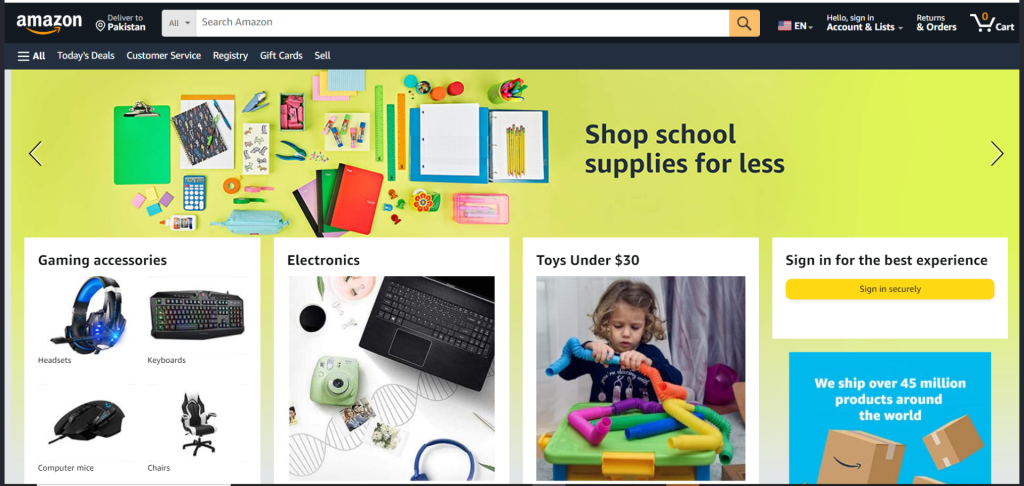
1. Amazon
An excellent example of effective client segmentation is Amazon. To make customised product recommendations, they examine the buying patterns and browsing habits of their users. Amazon customises the homepage and email suggestions to highlight related products by taking into account what a customer has purchased or expressed interest in. The outstanding sales results for Amazon are largely due to this strategy.
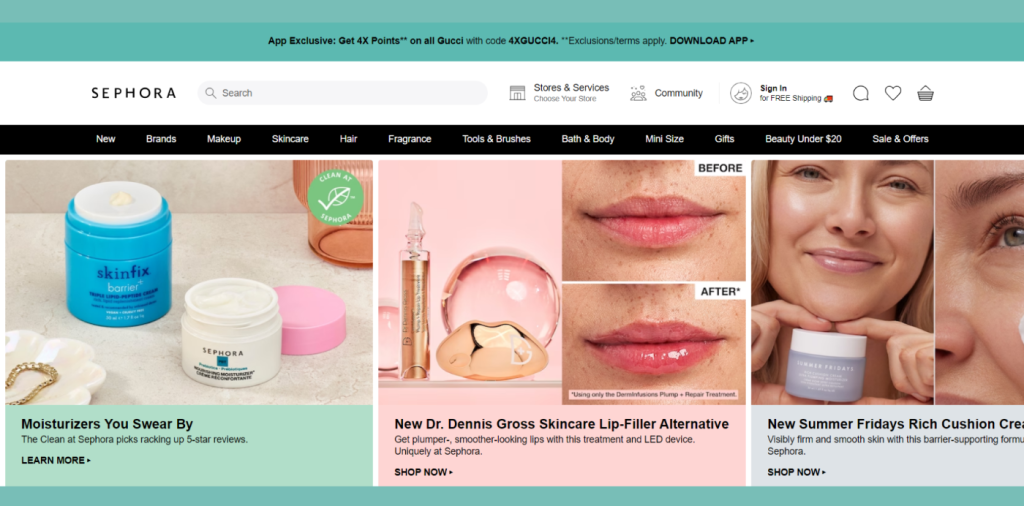
2. Sephora
With its “Beauty Insider” programme, the beauty shop Sephora has mastered segmentation. They offer multiple tiers of incentives and discounts to customers based on their buying patterns. Customers are encouraged to spend more in order to reach higher tiers, which promotes loyalty and raises customer lifetime value.
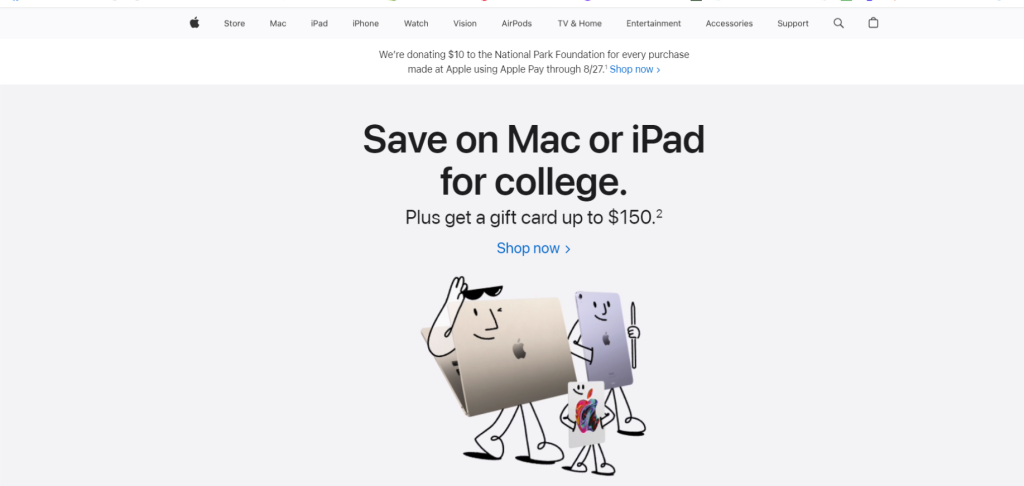
3. Apple
Apple divides their client base into different groups based on characteristics like age, income, and education, as well as lifestyle, values, and usage patterns. For instance, they might appeal to more frugal customers with older models or refurbished handsets while still targeting tech-savvy early adopters with the newest iPhone features.
Tips for using customer segmentation
The following are some tips for using customer segmentation on Shopify:
- Start with the basics. At initially, avoid attempting to group your customers in too many specific ways. You should start by creating categories based on certain fundamental demographic and behavioural factors.
- Apply several standards. Your customer base shouldn’t be divided up based on just one factor. Your segments’ accuracy will increase with the number of criteria you use.
- Iterate while testing. Test several marketing initiatives after you have built your segments to see which ones are most effective. In order to continuously improve your segments, you can also leverage user feedback.
Customer segmentation is an effective technique that can enhance your company. You may increase sales, foster client loyalty, and enhance your bottom line by taking the effort to segment your consumer base and focus your marketing properly.
Conclusion
A potent tactic that can take your e-commerce company to new heights is customer segmentation. You may develop stronger bonds with your clients, boost their loyalty, and spur revenue development by better knowing them and adjusting your marketing strategies accordingly. Implementing efficient consumer segmentation is possible with the help of the tools and data offered by the Shopify platform. Start conducting data analysis, creating segments, and developing individualised marketing campaigns to experience the revolutionary effects of client segmentation in the e-commerce industry.
Keep in mind that effective client segmentation is a continuous effort. To stay ahead in the cutthroat e-commerce environment, continuously assess the results of your efforts, fine-tune your segmentation, and modify your methods.
Join us as you begin your Shopify journey
We are e-commerce specialists and Shopify Partners. Get in touch with us if you need assistance with Shopify, need a whole website built, or have any other general questions.